
The Painting Behind You: Why Nonprofit Leaders Miss Their Biggest Opportunities
What the Mona Lisa taught me about the opportunities we’re failing to see
I have to be honest with you: I don’t really get the Mona Lisa.
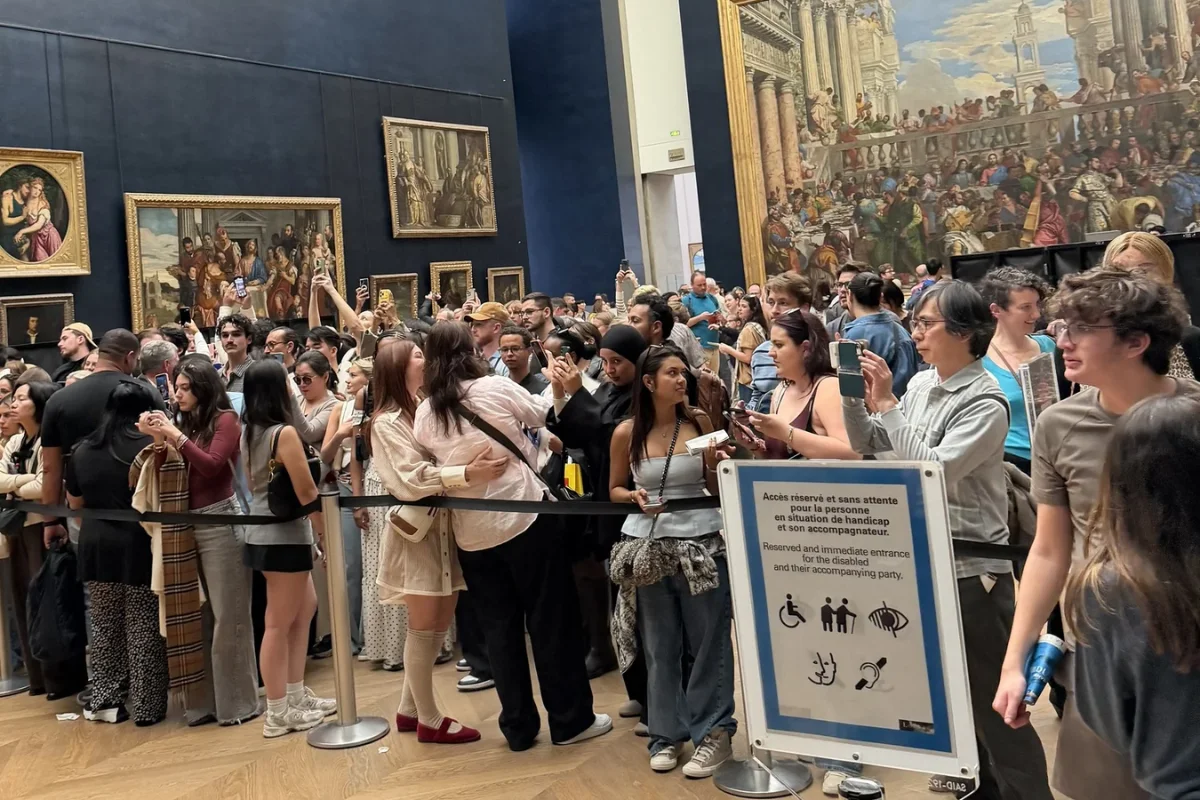
On a recent trip to Paris, I stood in the Salle des États at the Louvre, craning my neck past the hundred-person crush to see the famous painting that is, by most accounts, smaller than you’d expect. The crowd was extraordinary – tourists, influencers, and art-lovers alike, all with phones raised overhead, everyone pressing forward toward that one small canvas on the far wall.
And then I turned around.
Behind the crowd – quite literally behind our backs – hung one of the largest paintings in the Louvre’s entire collection.
A massive, magnificent painting, full of colour and life; painted in amazing detail. Breathtaking. Yet shockingly, almost no one had noticed it, let alone was looking at it.

The Pull of the Familiar
There is something deeply human about moving toward what’s familiar – what’s famous, what everyone else is already looking at. In the nonprofit sector, we constantly flock toward the familiar. We chase the same funders because that’s where the money has always come from. We run the same programs because they’re the ones people recognize and attended last year. We measure success the same way we always have because that’s what we think is expected.
We go to see the Mona Lisa because that’s what one does when visiting the Louvre.
Meanwhile, extraordinary possibilities hang just behind us – remaining unseen and unexamined, waiting patiently to be noticed.
This is an observation, not a criticism. It’s a completely understandable response to the pressure, busyness, and genuine weight shouldered by all of us who lead mission-driven organizations. When the hustle is real – and it is real! – our default is to the known path.
The familiar grant, usual donor, the overly used model. The scarcity trap is real, and it’s sustained not only by funding constraints but by our professional habits and by the absence of better frameworks to drive our future success.
Since visiting the Louvre the question I keep returning to is this:
- What are we flocking toward out of habit?
- When the crowd pushes forward, when do we step aside and look in another direction?
- What are we missing?
- What are the opportunities, and paintings behind us that we simply haven’t turned around to see?

What The Room Discovered
When I shared this story recently at a KEA Canada Nonprofit Leader Roundtable, the conversation that followed reminded all of us why this work matters. Leaders quickly named their own “Mona Lisa”…
“We are all running toward the same funding. Everyone is chasing the same pie.”
“In my world, there are certain names that always come up – it’s like the Mona Lisa. You’re always looking at them. And my job is not only to turn around and look at the other possibilities, but to get other people to turn around with me.”
“It’s just so hard to build in the downtime to even ponder what it is.”
Someone else named what many were feeling:
“AI might well be one of the paintings behind us.”
“In order to think bigger, I need to literally schedule myself the time to do that.”
Turning Around Together
What I find hopeful is that leaders already know this. They’re not unaware of the painting. They’re just caught in the current of their days.
So perhaps the question isn’t only what’s behind you, but what would it take to turn around? Maybe it’s ten sacred days a year with no meetings. Maybe it’s a coffee with someone outside your usual circle. Maybe it’s walking into a room full of peers and letting yourself be surprised by what you hear. Maybe it’s simply the recognition that you’re not alone in this – that the isolation many leaders feel is shared, and that naming it together is itself a kind of turning around.
One thing I’ve come to believe deeply, through years of working with nonprofit leaders across this country: the organizations that build the capacity to sustain their missions are the ones whose leaders give themselves permission to look up, out, behind, and around. Not just once, but as a sacred practice. It’s a way of leading they fiercely protect.
The GROW Model – the methodology at the heart of KEA Canada’s work – is built on exactly this premise. That sustainable organizations don’t happen by accident or by grinding harder at what already exists. They happen when leaders get Grounded in what’s real, build Revenue capacity with intention, look Outward beyond their own walls, and lead as Whole people and organizations. It’s a framework for turning around and seeing what’s already there.
Marcel Proust wrote: “The real voyage of discovery consists not in seeking new landscapes, but in having new eyes.”
The painting is already there. It’s been there all along. It’s waiting for you.
What would it look like to turn around? What’s the ‘painting behind you’? Ready to build the capacity to act on it? Let’s connect.
Read More Articles

Smart Tools for Smarter Grant Writing
Exploring AI-Powered Options Nonprofits Can Actually UseArtificial Intelligence (AI) is finding its way into almost every corner of nonprofit work — and grant writing is no exception. For many organizations, the idea of drafting proposals faster sounds like a dream....

Listening – The Heart of Donor Relations
There’s an art and a science to strategic meetings.Here is a great video called Having Strategic Conversations from Karen Osborne, on how to plan a strategic meeting. When I was first starting out in major gift meetings, I remember being soooooo nervous. I wrote...

Future-Proofing the Charity Finance Sector
This September, Kathy Arney wrote an article for Hilborn: Charity eNews, an organization that has been keeping nonprofit leaders updated on news, trends, tips and analysis of developments in the fields of fundraising and nonprofit management since 1991. Her article...